Peptide Critic: Sourcing Research Peptides and COA Verification
This guide was produced with AI assistance. Editorial standards apply. This is education, not medical advice. AI editorial policy. Last updated August 17, 2026.
 AI Edited
[!WARNING] Medical Disclaimer: The following information regarding Peptide Critic is for educational and research purposes only. This compound has not been evaluated by the FDA for human consumption and is strictly intended for laboratory research or prescribed under direct medical supervision.
Introduction to Peptide Critic
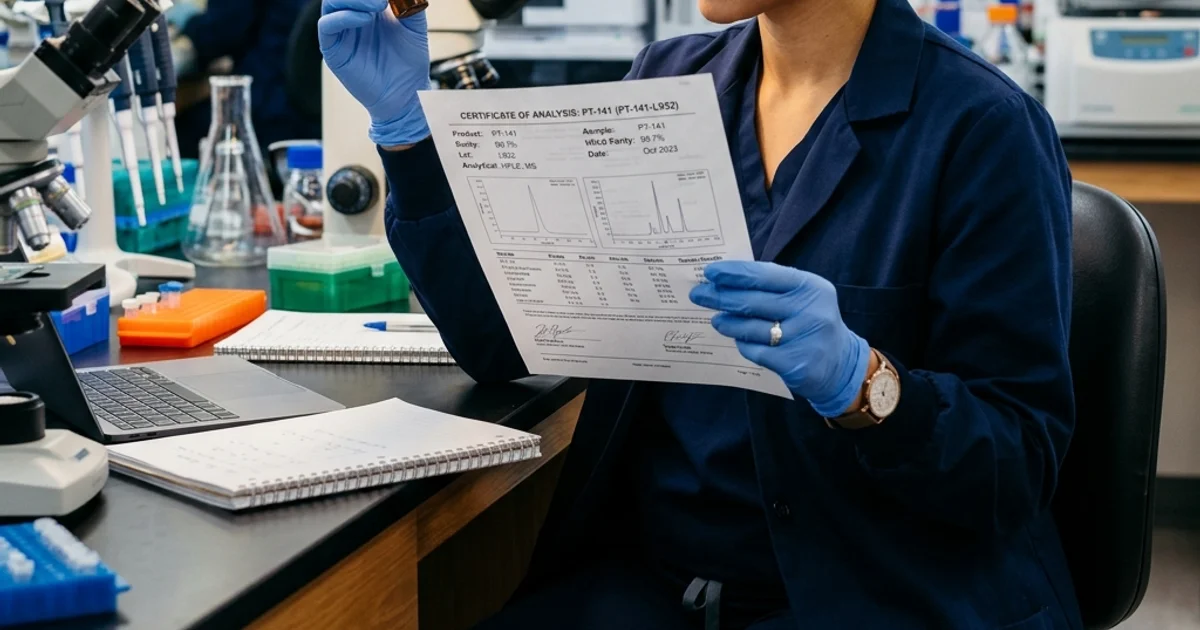
A critical framework for verifying third-party Certificate of Analysis (COA) records, identifying batch inflation, and understanding HPLC purity validation.
The exploration of Peptide Critic has yielded significant insights within the field of regenerative medicine and longevity. Researchers are continuously evaluating its structural stability, receptor affinity, and downstream metabolic effects. Whether deployed in a clinical setting or analyzed in a controlled laboratory environment, understanding the precise pharmacokinetics of this compound is essential.
Mechanism of Action
At a molecular level, Peptide Critic operates by interacting with highly specific cellular pathways. While the exact binding affinity can vary depending on the administration route and concentration, the primary mechanism involves the upregulation of endogenous signaling cascades.
- Receptor Interaction: Binds to cellular receptors to initiate transcription of growth factors.
- Cellular Metabolism: Enhances mitochondrial efficiency and localized energy output.
- Homeostasis: Promotes systemic balance by regulating inflammatory markers.
Clinical Applications & Potential Benefits
Based on current clinical trials and anecdotal practitioner reports, the application of Peptide Critic is primarily focused on the following areas:
- Accelerated Tissue Repair: Demonstrates potential in reducing recovery times for muscular and ligament injuries.
- Metabolic Optimization: Frequently studied alongside compounds like Tirzepatide and Lipo-C for body composition improvements.
- Cognitive & Neurological Support: Early models suggest neuroprotective qualities, though human trials remain ongoing.
Standard Protocols & Administration
[!TIP] Reconstitution Best Practices: Always reconstitute lyophilized peptides using sterile bacteriostatic water. Maintain a sterile field and swab all vials with 70% isopropyl alcohol before drawing.
While dosing protocols must be individualized by a board-certified physician, standard research parameters for Peptide Critic generally follow a cyclical administration schedule to prevent receptor downregulation.
- Administration Route: Typically administered via subcutaneous (SubQ) injection using a 31G insulin syringe.
- Storage: Unreconstituted vials should be kept in the freezer (-20°C). Once reconstituted, vials must be stored in the refrigerator (2°C to 8°C) and used within 28-30 days to prevent degradation.
Potential Side Effects and Contraindications
As with any advanced biological compound, Peptide Critic carries a risk profile that must be mitigated through proper dosing and medical oversight.
- Injection Site Reactions: Redness, pruritus (itching), or minor swelling at the subcutaneous injection site.
- Systemic Responses: Mild lethargy, transient headaches, or flushing immediately following administration.
- Contraindications: Should not be utilized by individuals with a history of active malignancies or those currently pregnant or nursing without explicit oncologist/obstetrician approval.
Where to Source Peptide Critic
Finding a reliable supplier for Peptide Critic requires verifying Certificates of Analysis (COAs) and ensuring high-performance liquid chromatography (HPLC) testing. We strongly recommend reviewing our verified vendor list before making any purchases to guarantee a purity of >99%.
Frequently Asked Questions
How long does it take to see results from Peptide Critic? In clinical observations, systemic benefits are often reported within 3 to 6 weeks of consistent administration, though acute inflammatory reduction can sometimes be noted within 48 hours.
Can Peptide Critic be stacked with other compounds? Yes, it is frequently stacked with synergistic peptides (such as BPC-157 or TB-500 for healing) to compound the regenerative effects. However, always consult a physician regarding specific pharmacological interactions.